Ekibastuz GRES-2
3 March 2014
Project: Asynchronous drive for completing the 20R-1 pumping unit of the Gidromekh-4000 dredger produced by Gidromekhanizatsiya JSC within the framework of the project “Expansion and reconstruction of Ekibastuz State District Power Plant-2 with the installation of a power unit st. No. 3" regarding the construction of dust suppression facilities at the ash dump of Ekibastuz State District Power Plant-2.
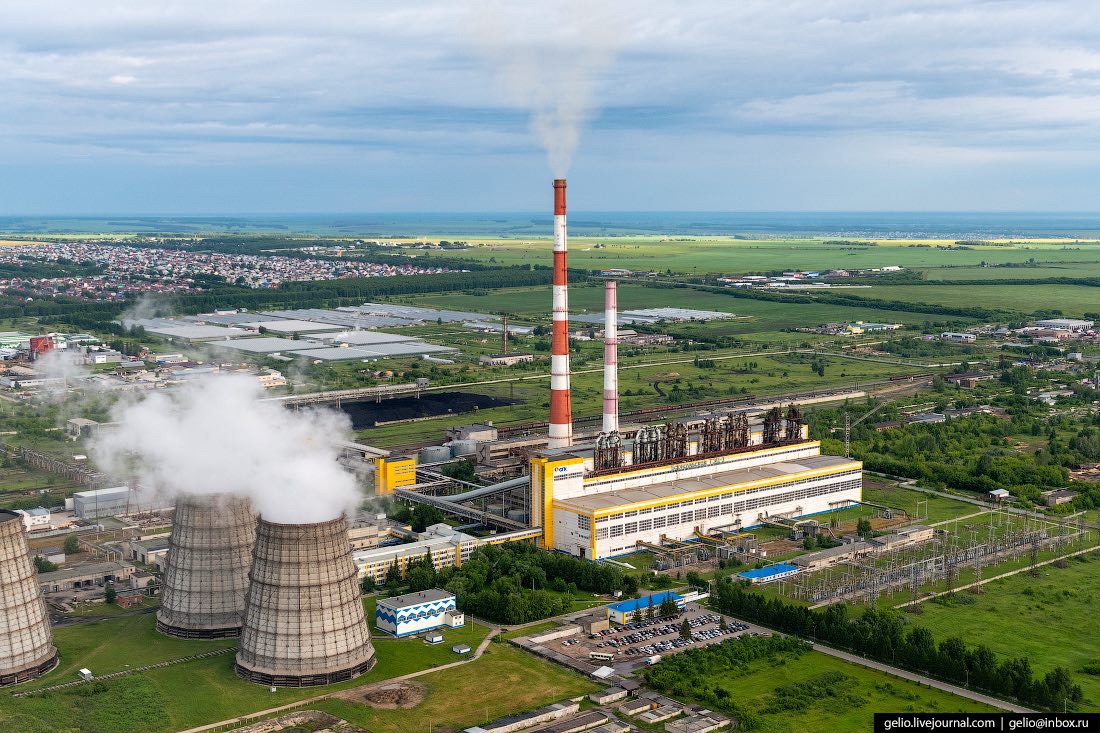
Ekibastuz GRES-2 generates electricity from high-ash Ekibastuz coal in two 500 MW power units, and has an installed capacity of 1000 MW. Its two power units today generate about 12% of all electricity produced in Kazakhstan. The energy from GRES-2 is intended to supply the north of Kazakhstan. Consumers are dozens of enterprises not only in Kazakhstan, but also in Russia.Construction of the station began in 1979. The project, developed in 1983 by NoTEP, provided for the construction of 8 power units of 500 MW each. However, in 1993, after the commissioning of the second power unit, further development of the station was suspended. At the same time, a significant groundwork was created for the construction of subsequent power units. For example, the cooling reservoir and ash dump were built for 16 power units, the chemical shop was built taking into account 8 power units, the fuel transport shop is capable of supporting the operation of 4 power units. The launch of the first unit of GRES-2 took place in December 1990, and on December 22, 1993 the second power unit was launched.

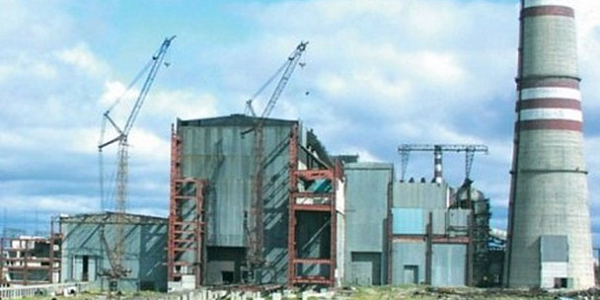
Fig.1 Site for construction of unit No. 3
Currently, the project “Expansion and reconstruction of Ekibastuz GRES-2 with the installation of a power unit st. No. 3" regarding the construction of dust suppression facilities at the ash dump of Ekibastuz State District Power Plant-2.
According to the technical design decisions, dust suppression is carried out by mixing clay binder material with the ash and slag pulp in order to create a cohesive material that is resistant to wind. Clay suitable for binding ash and slag lies below the water level under the northern shore of the ash dump. Clay extraction is provided by a suction dredger capable of extracting such heavy soil.
As part of this project, the Gidromekhanizatsiya Plant received the right
for the design, manufacture and supply of the Gidromekh 4000 Em Power suction dredger with a capacity of 4000 m3/час по пульпе с фрезерно-шнековым рыхлителем
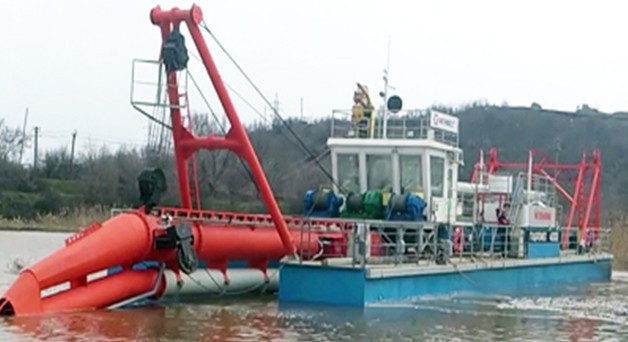
Fig.2 Hydromech 4000 Em Power suction dredger
"Hydromechanization Plant" was the largest plant in the former USSR for the production of powerful dredgers and auxiliary equipment. During its activity, the Hydromechanization Plant has built more than 1,250 dredgers of various types, as well as floating cranes for booster stations, without receiving a single complaint about the products. As an enterprise producing large-scale serial products, the Hydromechanization Plant also became an experimental base where, in alliance with industry design and engineering organizations, new equipment was created - dredgers.
The pump used on the dredger used is a modern Velet55/50 pump produced by Gidromekhanizatsiya Plant with a capacity of 3500-5800 m3 / hour.
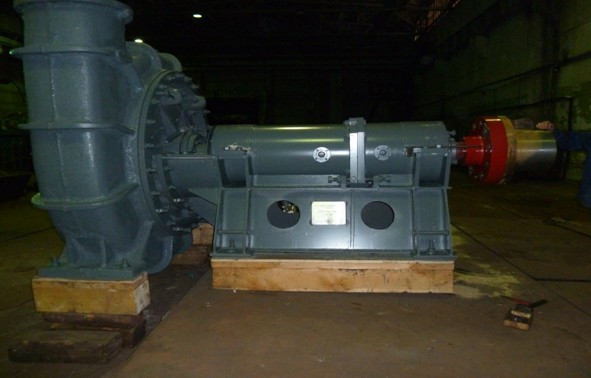
Fig.3 Soil pump Velet 55/50
Application:
Velet 55/50 soil pumps are designed for pumping highly abrasive hydraulic mixtures with pH 6...12, density up to 2200 kg/m3, temperature from 278 to 343 K (from 5 to 70°C), volume concentration of solid inclusions up to 40%, microhardness up to 11000 MPa. These soil pumps are installed on high-performance dredgers of the Gidromech 3800 and Gidromech 4000 series
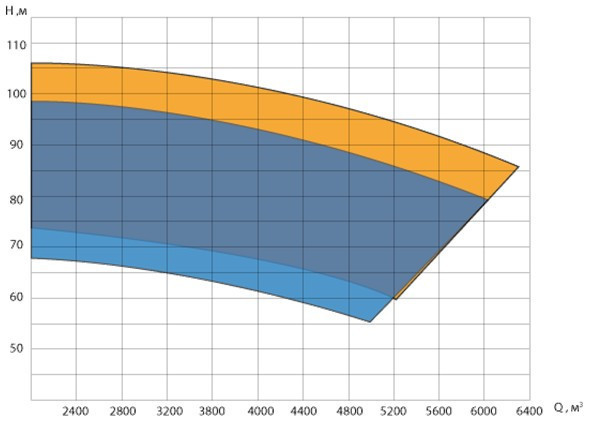
Fig.4 Characteristics of the Velet 55/50 pump
As a drive for the pumping unit, instead of a traditional synchronous electric motor, JSC EnergoFront developed a version of the high-voltage asynchronous squirrel-cage electric motor FHC630LI12 (1600 kW, 6 kV, 500 rpm) produced by CG-Electric System (Hungary).
The plant has more than a century-long history of producing electric motors, specializes in the production of electric motors to individual customer requirements (installation on an existing foundation, double “squirrel cage” for heavy starting, load testing, etc.)

Fig.5 Dimensional sketch of the FHC630LI12 electric motor
A feature of the electric motor used is its ability to work on a foundationless frame (rigid welded structure), as well as the ability to work at a slope of up to 10 degrees from the horizontal.
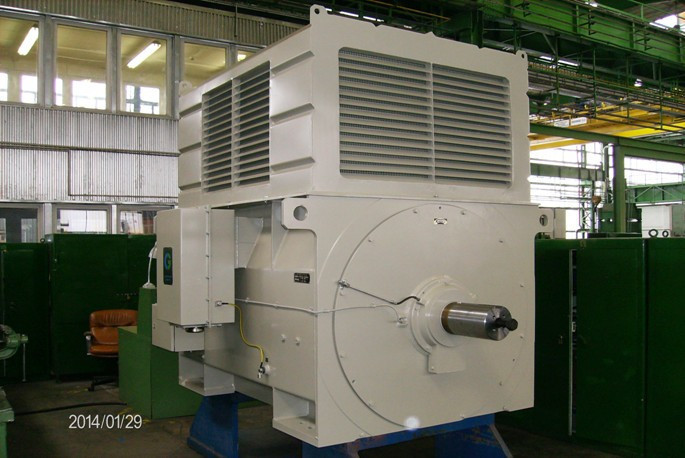
Fig. 6 Electric motor FHC630LI12 (1600 kW, 6 kV, 500 rpm), prepared for shipment.
Electric motor FHC630LI12 (1600 kW, 6 kV, 500 rpm) was manufactured in a short time and prepared for shipment. Factory tests carried out confirmed the entire list of declared characteristics.


Fig. 7 Graphs of the electric motor factory test report
In accordance with the terms of the contract with the customer, specialists from the service department of JSC EnergoFront will carry out preliminary assembly of the pump with an electric motor at the Gidromekhanizatsiya site, as well as installation supervision and commissioning work at the site of operation at Ekibastuz GRES-2 in the 3rd quarter of 2014.